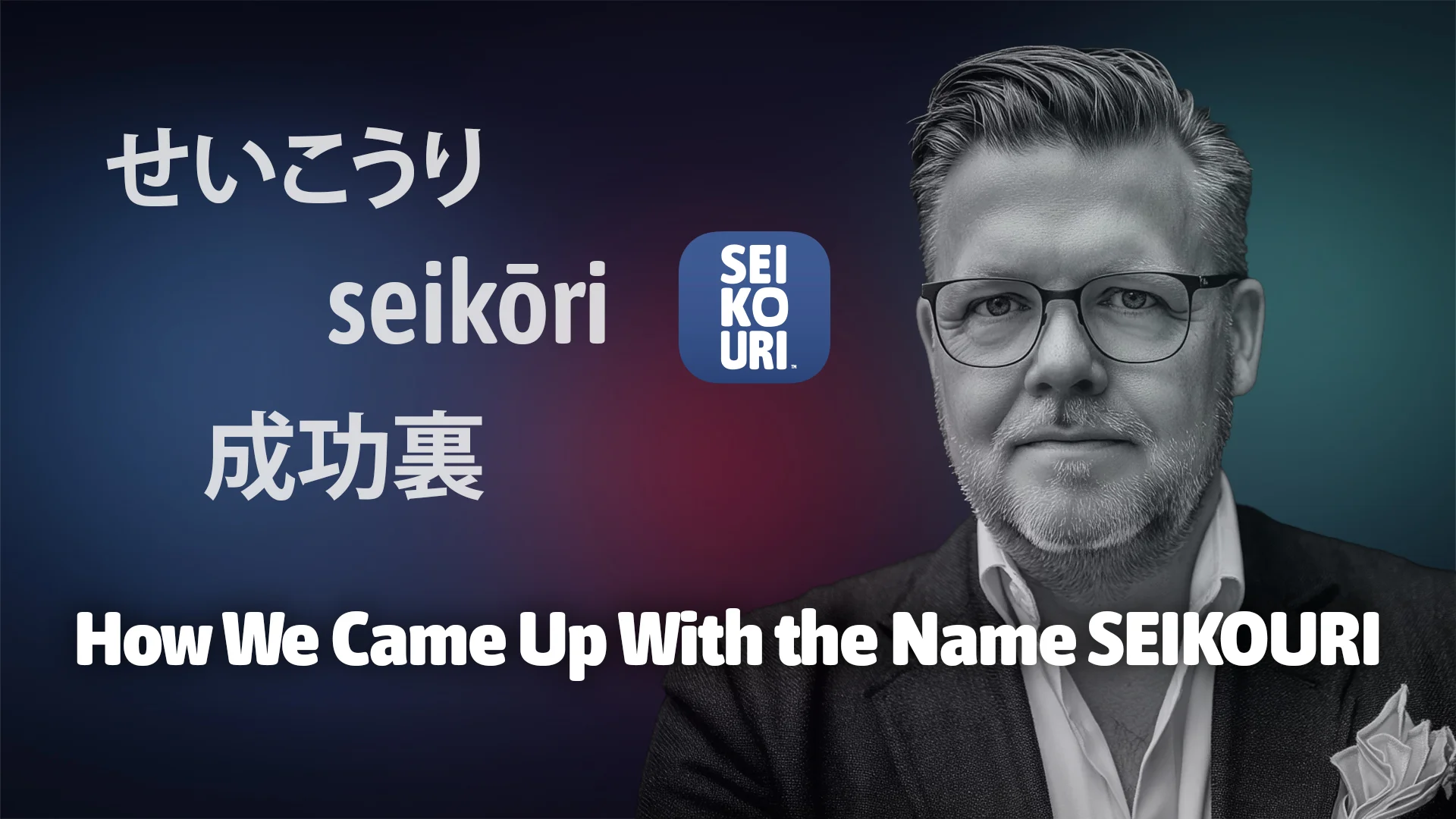

How We Came Up With the Name SEIKOURI
Verified Sources
In late 2007, we had the original idea for the business. Like every founder, we quickly ran into the least glamorous part of entrepreneurship: naming the company.
We didn’t want a name that looked cool on a slide deck and then fell apart the moment someone had to say it out loud. So we set a few ground rules.
First, it had to be pronounceable across languages without turning into something unrecognizable. If a name needs a five-minute pronunciation tutorial, it’s not a name; it’s a puzzle.
Second, we wanted the exact-match domain. Company name and domain name should be identical. No hyphens, no “official-” prefix, no creative spelling that people would forget the moment they closed the tab.
Third, we wanted it short. Eight characters or fewer. Long domains don’t just look clumsy; they create typos, confusion, and frustrated visitors.
And fourth, for a business with global ambitions, it had to be a .com.
Then reality showed up. An English word, eight characters or fewer, with the .com available—even in 2007—was basically extinct. We were heading toward those tragic domains that read like a desperate late-night infomercial. We were stuck. Two weeks before the official kickoff, we still had no name. We cycled through working titles, debated endless variations, and started doing that specific kind of founder spiraling where every idea sounds brilliant at 2 a.m. and ridiculous at 9 a.m.
At one point, someone suggested we do it like Prince and switch to a symbol. We laughed, and then we realized why that wouldn’t work. After Prince became a sign, the world started calling him “the artist formerly known as Prince.” Great branding problem, still no company name. Then came the moment that changed everything.
The Call
One day, the office phone rang. A voice with an Asian accent introduced himself and said he represented a large technology company headquartered in Japan. He’d heard about what we were building and wanted to hire us. We were thrilled. We walked him through our services, our approach, and our pricing. He sounded interested.
It was the kind of call founders fantasize about: early validation, real demand, a client before the company even officially existed.
Then, right before we wrapped up, he asked a simple question.
“By the way… what’s your company’s name?”
There was one problem. We didn’t have one. The blood froze. We said something incoherent, ended the call, and stared at each other in silence. We had a business idea, a potential client, and zero ability to answer the most basic question about our identity. That was the moment we reset everything.
The Constraint That Solved It
We started over with a different mindset. The name needed to be easy to say, easy to remember, and it needed to travel well. It also had to work in the one place we knew we wanted to win: the United States.
We kept coming back to one concept: what were we actually trying to help clients achieve? A successful outcome.
Not “growth” as a buzzword. Not “innovation” as a slogan. A concrete result.
Somewhere in that discussion, we thought: if this first conversation is with a Japanese company, maybe the name could nod to that—without pretending we were a Japanese firm.
That’s how we landed on a Japanese-inspired word: SEIKOURI.
In Japanese, seikōri (せいこうり) is associated with bringing something to a successful outcome—often written as 成功裏 (also seen as 成功裡). It has a meaning we liked immediately: success that isn’t just declared, but completed.
Not “success” as a vibe, but success as a finished result:
A launch that lands, a project that closes cleanly, an execution that holds up. That nuance is exactly why we chose it.
SEIKOURI stands for outcomes you can defend—built through what happens inside the work: rigor, judgment, and follow-through.
The Global Pronunciation Test
We loved the sound of it, but we didn’t trust ourselves. So we tested it like obsessive founders. We emailed more than 80 friends around the world and asked for a favor: read the word in your native language and record yourself saying it.
Within 48 hours, 57 MP3 files came back, covering everything from English and German to Portuguese, Russian, French, Spanish, and Italian.
We listened through every file, expecting chaos. Instead, we got something close to a miracle.
Across languages, it sounded remarkably consistent. No one turned it into something unrecognizable. No one struggled for thirty seconds before giving up.
The name traveled. Pronounceable globally: check. Then we looked at the spelling. Eight characters: check. Registered trademarks or name rights: None. And finally, the make-or-break moment. We ran a domain lookup: seikouri.com. Available. We assumed the system was wrong. We searched again. Still available.
At that point, we didn’t negotiate with fate. We registered it immediately. And that’s how SEIKOURI became the name: a word that sounded the same around the world, fit on a business card, and pointed to exactly what we care about—successful outcomes, built from the inside.